
Ever come across a used car listing that just seems too spotless? Perfect lighting, showroom-level polish, a price that makes you blink twice – and the seller insists it was "mostly highway miles"? That's the sort of setup that ought to make you pause.
In the used-car world, the red flags don't wave – they whisper. Things like odometers quietly rolled back, titles that were "laundered" clean, VINs that do not match the car, cars that technically shouldn't be on the road, and recalls no one ever got around to fixing. A plate check won't fix everything, but it's a fast first filter – the kind you'll wish you ran before spending a Saturday driving across town, only to find out that “clean title” actually comes with some awkward fine print.
What Is a License Plate Lookup?
A plate number, a hunch, and a lot of questions. A license plate search is the fast pull for key vehicle facts when that is all you have to work with. With FAXVIN's license plate lookup, you can check core identifiers in minutes, skip the DMV detour, and avoid burning half a day chasing paperwork that always seems to vanish at the worst time. We compile data from established reporting sources, so the results are tied to real records - not vibes, not wishful thinking.
It is especially handy when you are shopping. Run a plate check, then pair it with a VIN history lookup to confirm the basics (make, model, year, trim) and see whether history records exist. The practical point is simple: you are not buying the pitch - you are buying the facts. (Or, if we are being honest, you are trying to.)
What Are the Data Sources?
FAXVIN gathers vehicle records from a range of common industry sources, including:
- National Motor Vehicle Title Information System (NMVTIS);
- Canadian Motor Vehicle Agencies;
- Car Dealerships;
- Auto Auctions;
- Salvage Auctions;
- Insurance Companies;
- Collision Repair Facilities;
- Rental/fleet Vehicle Companies;
- State Inspection Stations;
- Manufacturers.
What Will You Learn from Our Reports?
Here is the quickest way to understand what a full vehicle history report can cover:
| Report Area | What It Shows | Why It Matters |
|---|---|---|
| Vehicle Identity & Specs | VIN, year, make, model, trim, engine | Helps confirm you are looking at the exact car from the listing |
| Title Status & Brands | Title labels like clean vs. salvage, junk, or rebuilt, flood, lemon, hail, fire | Title brands can hit the price, insurance, and financing in one shot |
| Ownership & Location Timeline | Owner count, title transfer dates, and state-to-state moves | Frequent transfers can be a sign the car keeps coming with the same problem |
| Accidents, Damage & Total Loss | Reported crashes, damage events, total loss calls, salvage or junk events | Prices the risk and tells you how hard to inspect it. |
| Odometer Timeline | Mileage readings | Helps spot rollback risk and numbers that just do not add up |
| Theft & Recovery | Theft flags and recovery records | A stolen-car buy can become a paperwork mess |
| Liens & Repossession | Lien indicators and repossession-related records | A lien can freeze the title transfer, and you do not want to find out at the DMV window |
| Sales & Auction Signals | Auction sales, salvage auctions, listing history, plus damage notes | Can explain damage history and why the car keeps showing up for sale |
| FAXVIN CarRank (Risk Snapshot) |
A 0–100 score that sums up key history signals | Lets you compare cars fast and spot the ones that deserve a closer look |
Practical Uses of License Plate Lookup Results
A license plate lookup can help in more situations than just "I am buying a car." Dealers use it to manage inventory risk, and everyday buyers use it to avoid expensive surprises. Same tool – different stakes.
Dealers and Businesses
- Confirm the history and condition of vehicles before they hit your inventory;
- Price with more confidence when history flags (or clean history) show up;
- Share a report to build transparency with serious shoppers;
Buyers and Consumers
- Catch warning signs before investing your time, cash or trust;
- Negotiate from evidence, not vibes;
- Avoid getting stuck with a car that comes with invisible strings attached;
We designed this tool to help people move from a plate number to real vehicle insight in seconds.
Reverse License Plate Number Search
When you run a plate with FAXVIN, we try to surface the core identifiers and a few useful vehicle attributes tied to that registration. Coverage varies by state and by what records exist, but a typical result often includes the VIN and a quick snapshot of basics like make, model year, trim, color, and engine.
If we can pull the VIN, that is really just your starting point. For most modern vehicles it is a 17-character identifier, and 17-character VINs have been the U.S. standard since 1981. We also run the check digit math used for North American VINs, which is a simple reality check on whether the VIN is formatted correctly and looks legitimate before you go any further.
License Plate Lookup vs. VIN Lookup
A plate lookup is often the fastest way to get to the VIN and confirm the vehicle basics, when the seller will not share it. Once you have a VIN, the VIN is typically the best "universal key" for deeper checks across databases.
| Start With | Best When You Have | What You Can Usually Confirm Quickly | What You May Still Need |
|---|---|---|---|
| License Plate | A photo of the plate, a parked car, or a seller who won't give up the VIN | Basic identifiers (VIN/make/model/year/trim) | The VIN, plus deeper history checks |
| VIN | Title paperwork, VIN on the dash or door, dealer's listing page | VIN format/check digit, factory build specs, stronger cross-database match | Physical inspection and paperwork verification |
License Plate Design and Formats
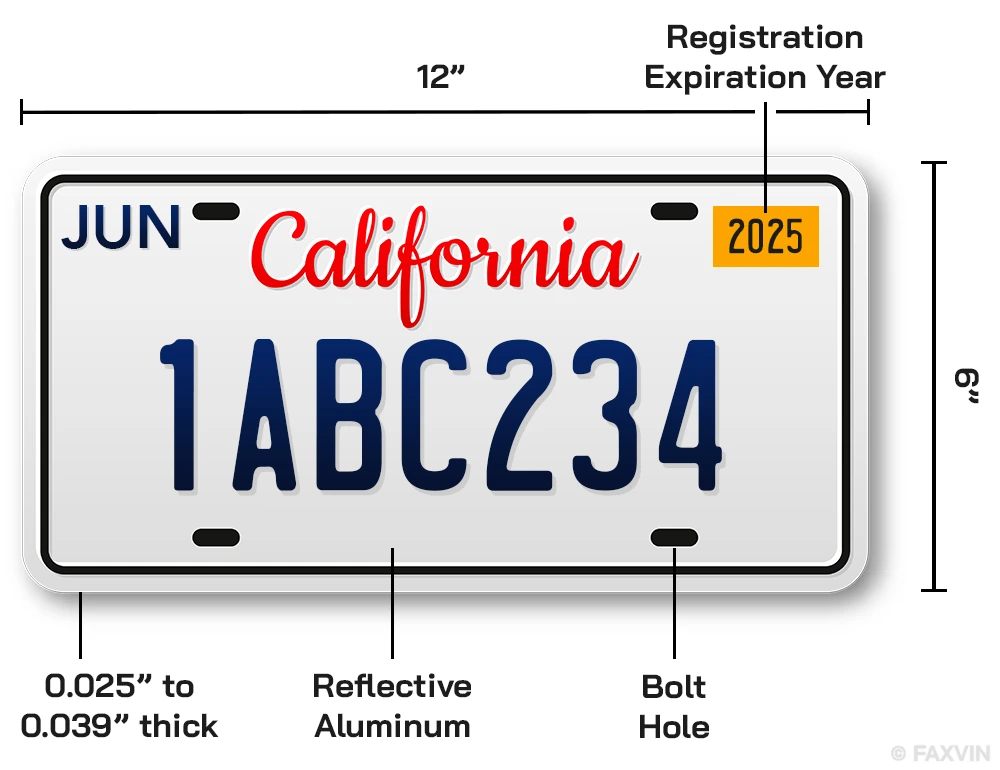
Plate designs and formats change from state to state. Slogans, landmarks, specialty backgrounds, the whole vibe. Most passenger vehicles use 12 by 6 inches plates, but what gets printed where, and what gets stuck on where, changes a lot.
Photo reads can get messy. Frames, bolt heads, glare, and busy designs love to disguise characters: O vs 0, I vs 1, B vs 8. Also, watch the corners. Many states use small registration stickers for month and year, and a plate frame can hide them. Missing stickers are not always a scandal, but they are a cue to look closer.
Front vs. Rear Plates
In a two-plate state, you will often spot a front plate or at least a bracket in listing photos. No bracket is not proof of anything, but it is a reason to confirm the registration state and plate type. To check your state's front-plate rule, click your state in the "Lookup by State" links at the bottom of this page.
Types of License Plates
Most states issue multiple plate types, including:
- Standard – The default tag design issued to most vehicles
- Personalized – Custom plates with a letter/number combination chosen by the owner
- Specialty – Theme plates (military, universities, causes, charities, and more)
- Disability – Plates or placards for qualifying drivers, often tied to accessible parking rules
Temporary & Dealer Tags
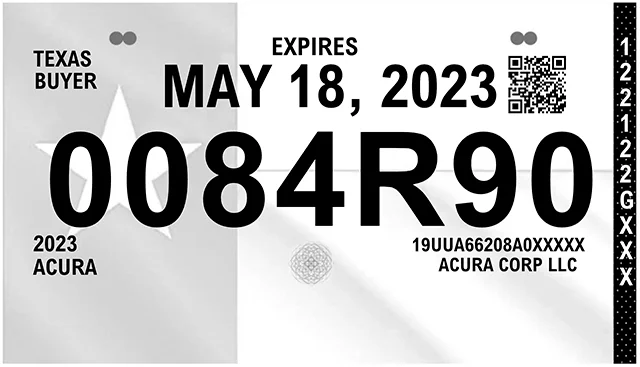
Temporary and dealer tags are all over the map by state, so keep it simple. Look for a clear expiration date in the state's usual printed style, and make sure the tag is placed where a plate would normally sit and can actually be read. If the photo is mysteriously blurry right where the tag should be, or a local listing is wearing an out-of-state temp, it might be fine, but it is also your cue to ask a few extra questions before you get invested.
FAXVIN vs. Other License Plate Lookup Options
On paper, every plate lookup looks the same. This table shows where they actually differ.
| Feature | FAXVIN Free Basic Report |
FAXVIN Full Report | Other Paid History Reports |
DMV Records Request |
|---|---|---|---|---|
| Subscription or Recurring Billing | ✗ | ✗ | Often | ✗ |
| No Advance Registration | ✓ | ✓ | Often | ✗ |
| Fast Online Results | ✓ | ✓ | ✓ | ✗ |
| Check by License Plate | ✓ | ✓ | Sometimes | Sometimes |
| VIN Format Check (Check Digit) | ✓ | ✓ | Sometimes | ✗ |
| Title Brands and Status Signals | ✗ | ✓ | ✓ | State-only |
| Accident / Damage Records | ✗ | ✓ | ✓ | Limited |
| Maintenance & Service Records | ✗ | ✓ | Sometimes | ✗ |
| Auction and Sale Signals | ✗ | ✓ | Sometimes | ✗ |
| Nationwide Coverage (50 States + DC) | ✗ | ✓ | Sometimes | State-only |
| CarRank Metric (Risk Snapshot) | ✗ | ✓ | ✗ | ✗ |
How to Run a License Plate Lookup
Running a plate check with FAXVIN takes about 10 seconds:
- Grab the plate number from the car or the registration.
- Pick the state from the dropdown.
- Type the plate into the search box.
- Hit "Check Plate" to preview the core info we can dig up – VIN, make, model, year.
- Step up to a full report if you want the deep stuff: crash history, branded titles, shady mileage, stolen records, liens – all the skeletons in the closet.
Small step. Big difference – especially before you wire a deposit, send a payment app transfer, or commit to a long drive to "go see it in person."
Frequently Asked Questions
Can I get a vehicle history report using a license plate number?
Is FAXVIN plate lookup free to use?
Is it legal to look up a license plate?
How to find the owner of a license plate?
Why is my plate coming up as not found?
Will the owner know I checked their license plate?
Was this article helpful?